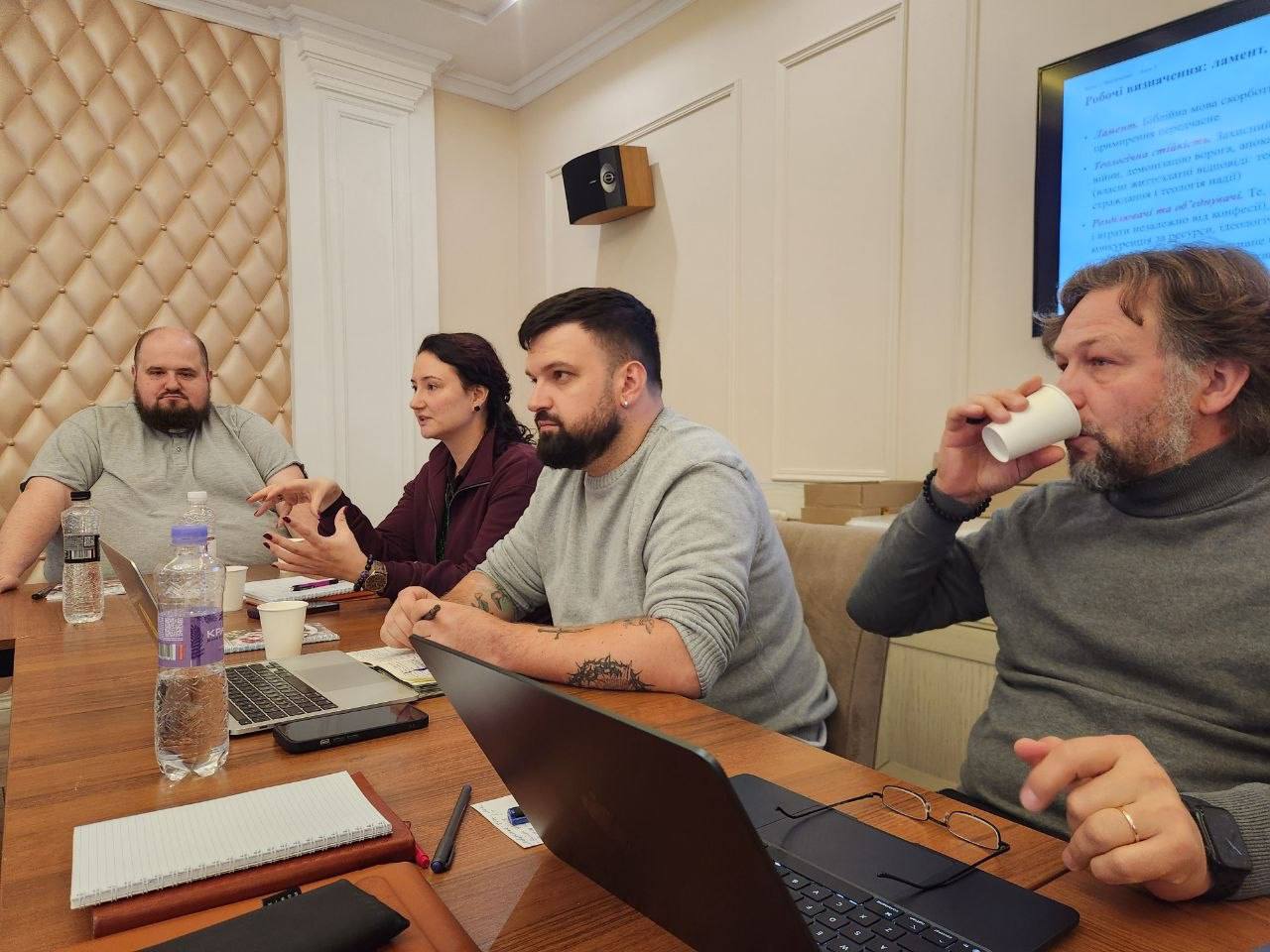
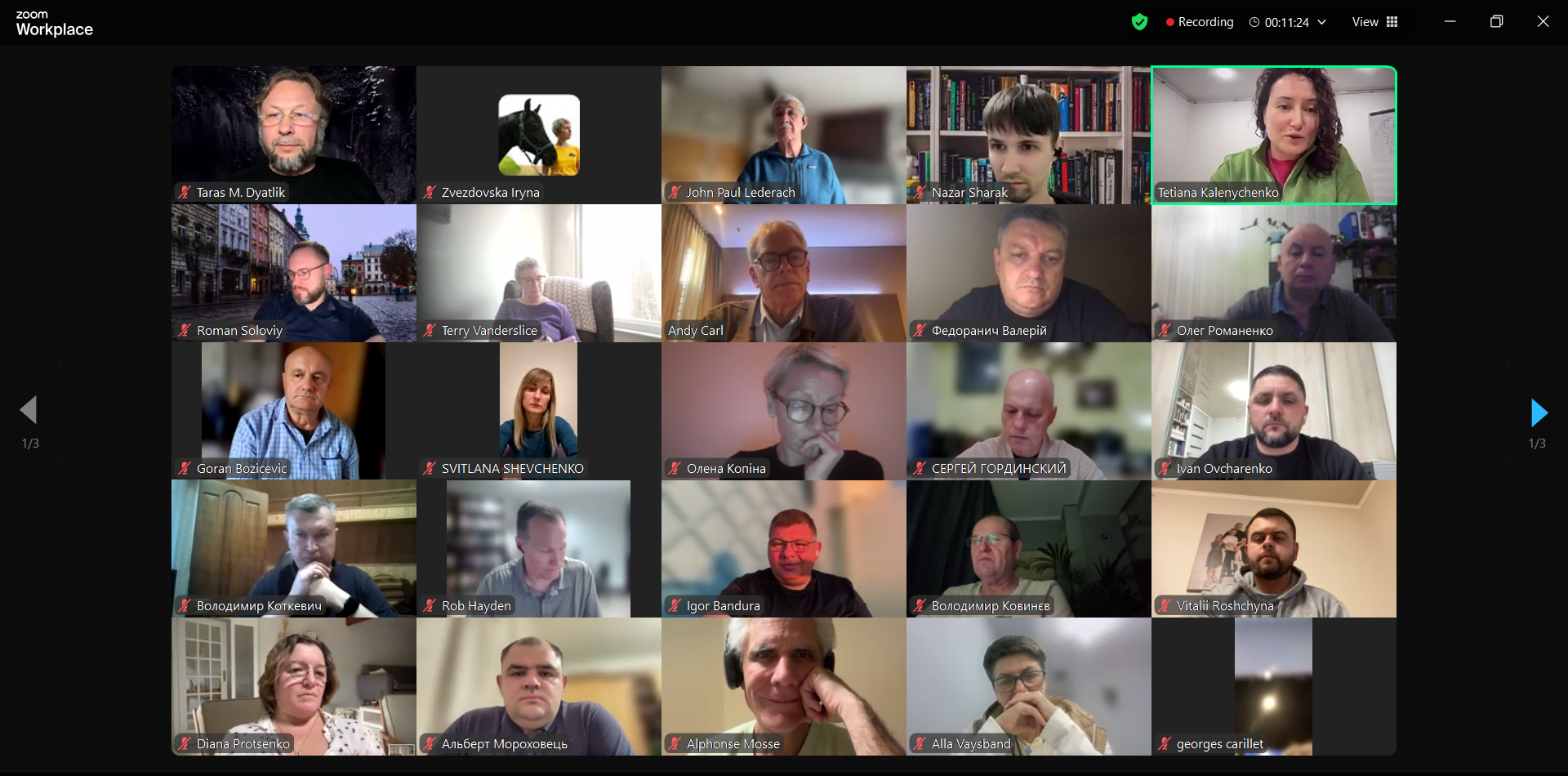
On 30 September, the Ukrainian edition of "Reconcile: Conflict Transformation for Ordinary Christians" was presented in an online event featuring the book’s author, world-renowned peacebuilder and mediator John Paul Lederach. The event was organised by Dialogue in Action together with the Eastern European Institute of Theology and Dukh i Litera Publishing House, which published the Ukrainian edition.
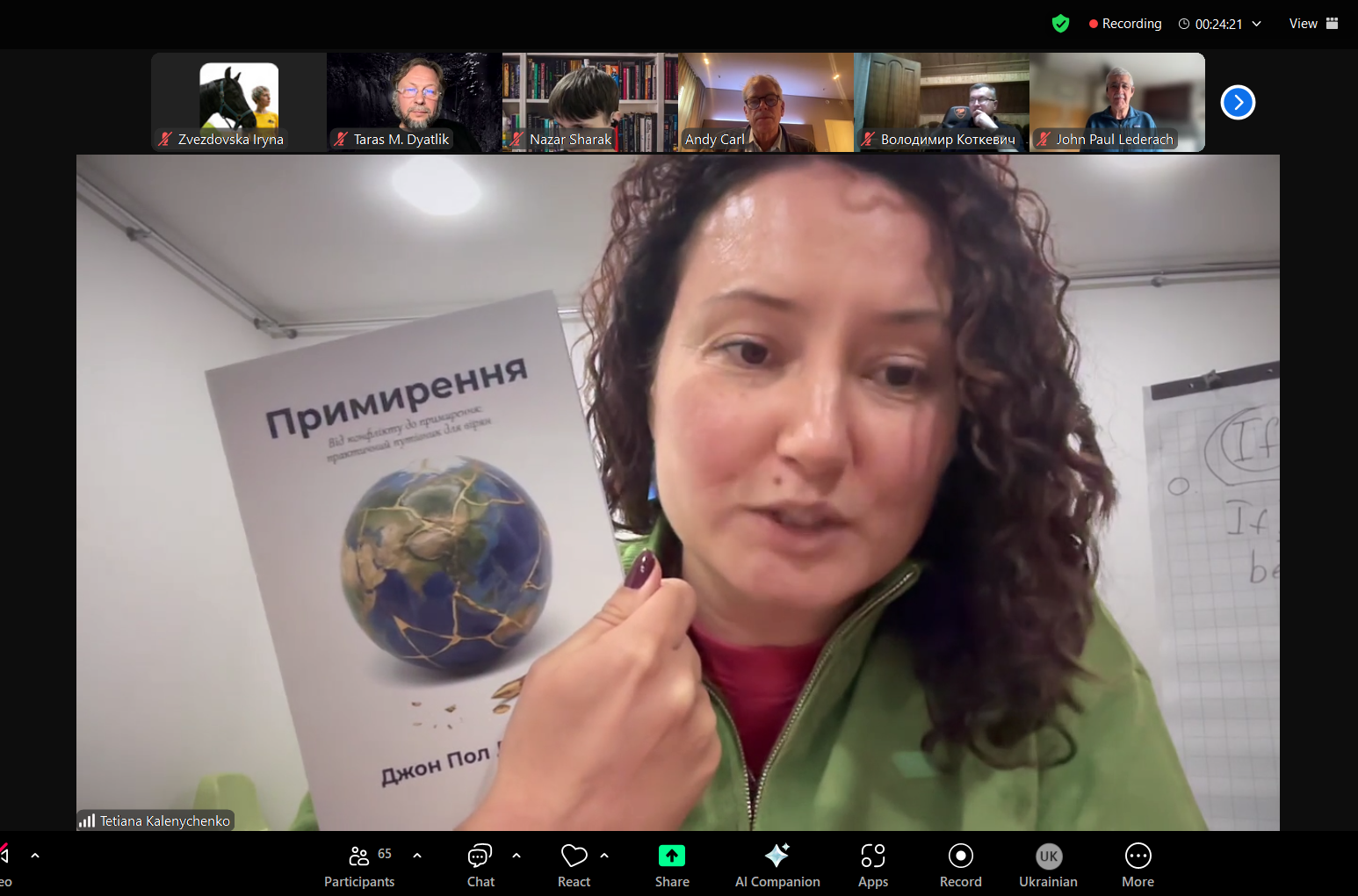
The presentation was moderated by Dialogue in Action experts Tetiana Kalenychenko and Taras Dyatlik, who symbolically opened the event with a minute of silence in memory of those killed in Russia’s war against Ukraine. Andrew Carl, an American peacebuilder and co-founder of International Alert and Conciliation Resources, also addressed the participants with opening remarks.
The conversation with John Paul Lederach went beyond a discussion of the book itself, touching on faith, honesty, rehumanisation, and reconciliation as a journey rather than an end result:
“We often imagine reconciliation as a moment after which everything will be fine, but I invite you to imagine it as a horizon. A horizon gives us a direction and a point of reference towards which we move, but we never actually reach the end. It is not an event; it is a journey through life,” John Paul explained.
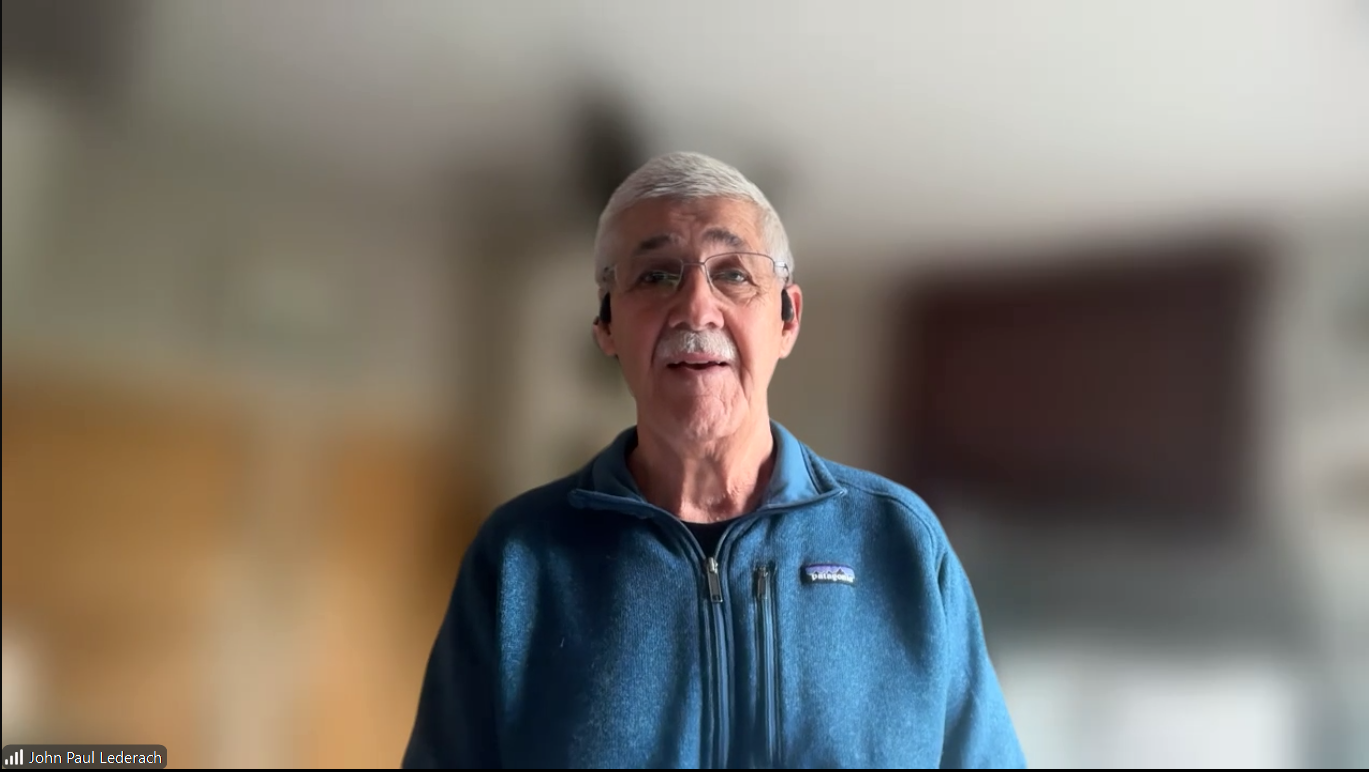
Speaking about peacebuilding, Lederach emphasised that it does not begin with the signing of a peace agreement. Work for peace continues before, during and for many years after a war ends – with relationships between people remaining at its centre. That is why, he said, it is important to choose and sustain our humanity regardless of what stage of the war we are in.
This conversation was particularly important in the Ukrainian context, where the word “reconciliation” may sound premature or even painful. Responding to questions from participants, John Paul stressed that, in the Ukrainian context, reconciliation is not about making peace with the aggressor, but first and foremost about finding ways to overcome internal divisions without losing one another.
“A peacebuilder’s perspective can be that of a grandmother or grandfather trying to look into the future of their grandchildren and imagine the kind of future they would want to pass on to them,” Lederach noted.
In his view, one of the most difficult parts of peacebuilding is waiting for a “starting point” – a favourable moment that, in reality, may never come. Instead, reconciliation is an “art of small steps” that we can take even when they are difficult to imagine. The peacebuilder shared a haiku he wrote during one of his training sessions:
“Don’t ask the mountain to move.
Take just one stone
each time you approach it.”
But small steps are not only about practical action. According to Lederach, the journey of reconciliation ultimately brings us back to questions of faith and how we understand our own relationship with God. War confronts us with questions about who we are and who we want to be, forces us to encounter others and try to understand their experiences – while at the same time leading us towards that inner encounter with God.
Lederach noted that faith is not about perfection, but about how we remain human. He also shared that he would rather work with people who have lost their faith but remained honest than with those who have ready-made spiritual and beautiful answers to everything.
We sincerely thank John Paul Lederach for joining the presentation and for such a profound and inspiring conversation. We are also grateful to all the participants for their interest, engagement and thoughtful questions during the event, and especially to our co-organisers for their support.
The book "Reconcile: Conflict Transformation for Ordinary Christians” will soon be available for purchase on the Dukh i Litera Publishing House website. Stay tuned for updates.