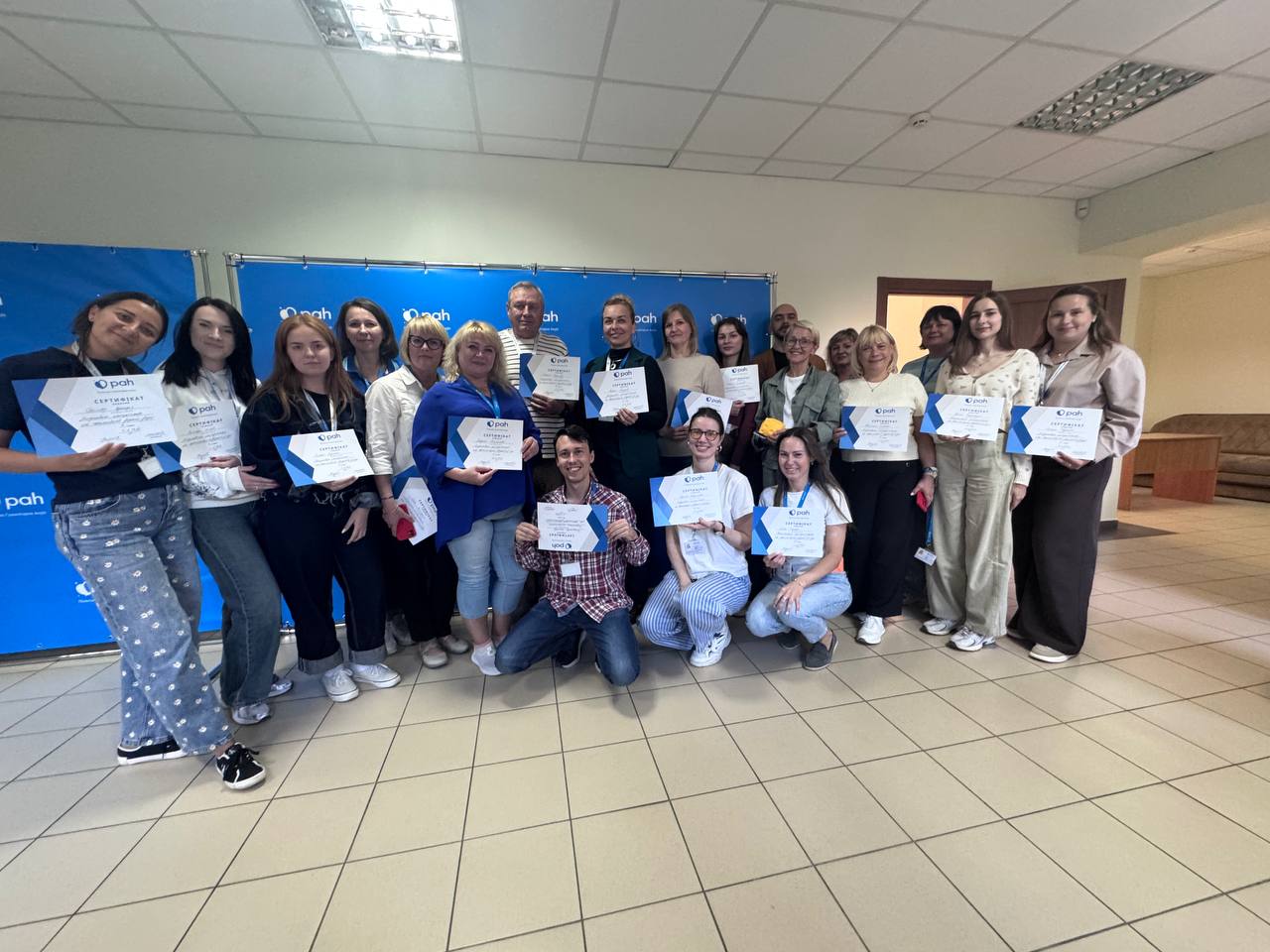
How can we address a problem directly without becoming confrontational? How can we give a colleague difficult feedback without damaging our working relationship? And what can we do when we are not being heard, are criticised, or face an aggressive response? On 7-8 September, Dialogue in Action facilitator Olena Kopina delivered a training in Kharkiv at the request of the Polish Humanitarian Action (PAH) team, exploring these and other aspects of assertive communication in depth.
“A difficult conversation does not necessarily mean a conflict. It is a moment when we need to be honest with ourselves, listen to the other person, and maintain the connection at the same time. Assertiveness helps us not avoid such conversations, but navigate them more consciously,” Olena explained.
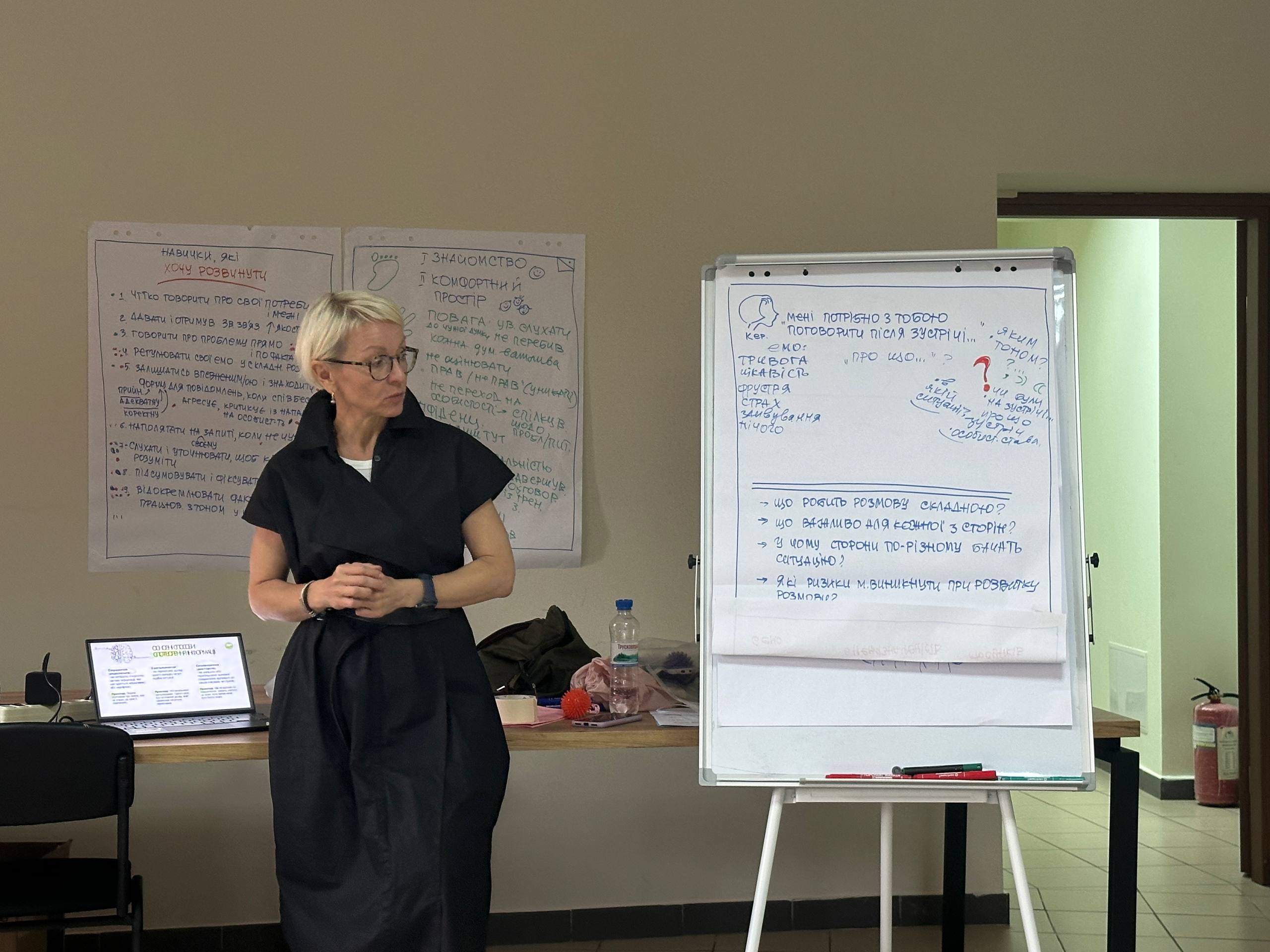
During the training, participants explored how emotions, assumptions, and habitual communication styles shape our interactions, and what can help us stay connected even in tense situations. The main focus was on assertive communication – a way of expressing our position, feelings, needs, and boundaries openly and confidently, while maintaining respect for the other person.
Participants practised approaches that help them give and receive constructive feedback, address problems without blaming others, make clear requests, check their own assumptions, and agree on next steps. For example, they put “I-statements” and the FEN (Fact–Emotion–Need), DESC (Describe–Express–Specify–Consequences), and SBI (Situation–Behavior–Impact) models into practice.
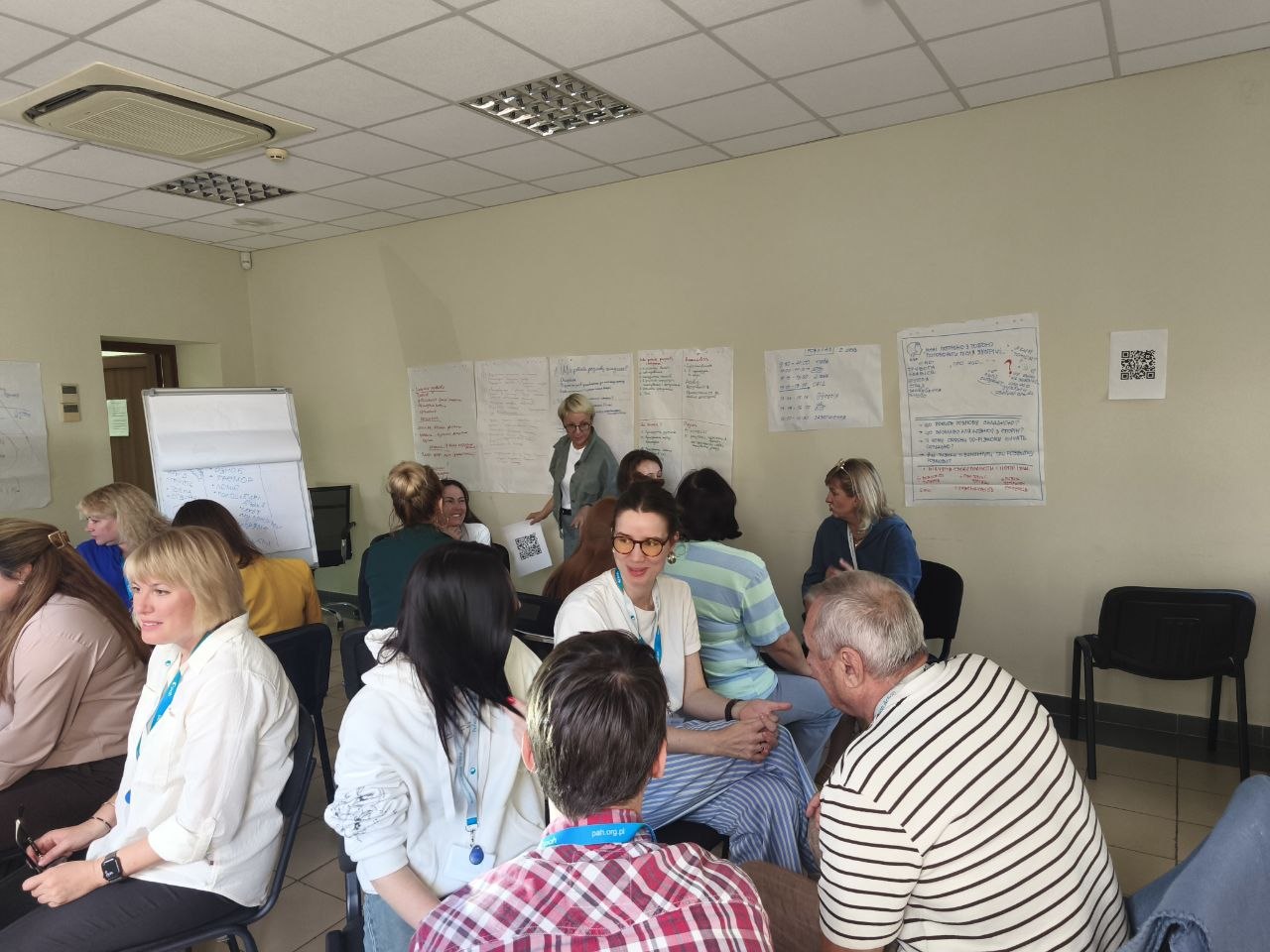
At the end of the training, PAH team members noted that the interactive exercises helped them genuinely strengthen their assertive communication skills over the two days. An added benefit was team building: practising together gave participants a better understanding of how their colleagues respond in different situations, listen to one another, and work together to find solutions.
We sincerely thank the participants for their active engagement and Polish Humanitarian Action for the invitation and for organising the training!