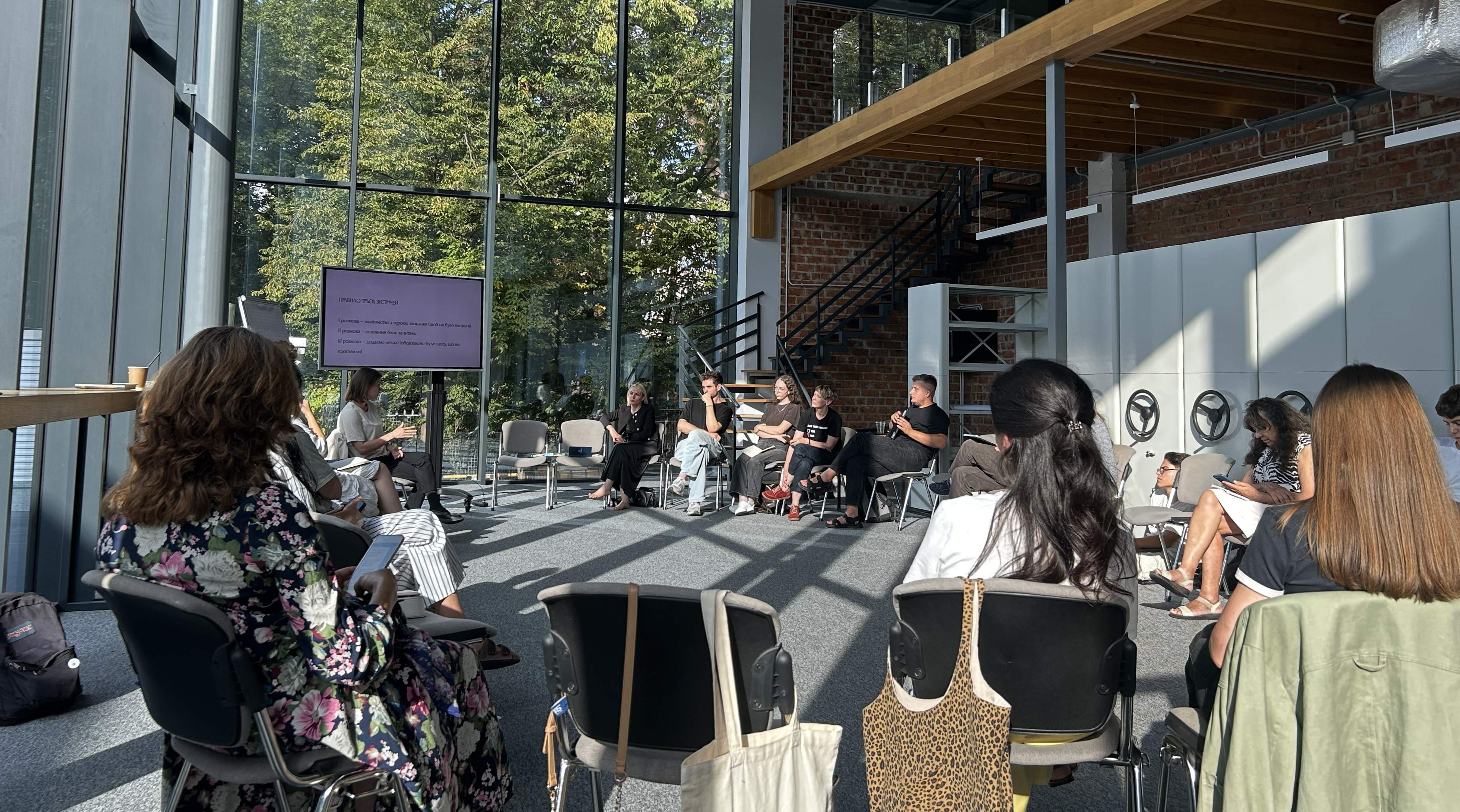
Since the start of russia's full-scale invasion of Ukraine, churches and religious communities have played a distinct role: they not only support people in their hardest moments but also become places where testimonies about the war are recorded. At the same time, memory is also collected and preserved by other spheres — cultural, human rights, and documentation — each in its own way. The "Memory in Action" workshop was organized as a platform where representatives of these different fields could hear one another and share their unique experience.
The workshop took place August 19–21 in Lviv, hosted by the Ukrainian Baptist Theological Seminary (UBTS). Over the course of three days, participants learned to ethically collect oral testimonies, work with stories of loss and human resilience, and develop their own memorialization initiatives.
The program opened with a conversation on the theology of memory with Dmytro Fedorchak - a dialogue facilitator and researcher of the theology of memory at the NGO Dialogue in Action. In his talk, Dmytro turned to chapters 7 and 8 of the Book of Nehemiah, reflecting on how rebuilding the walls is not yet rebuilding the community, and on how memory restores names to those who might easily be reduced to statistics.
"The question is not only what we will remember about the war. The question is what kind of people this memory will make us," he emphasized.
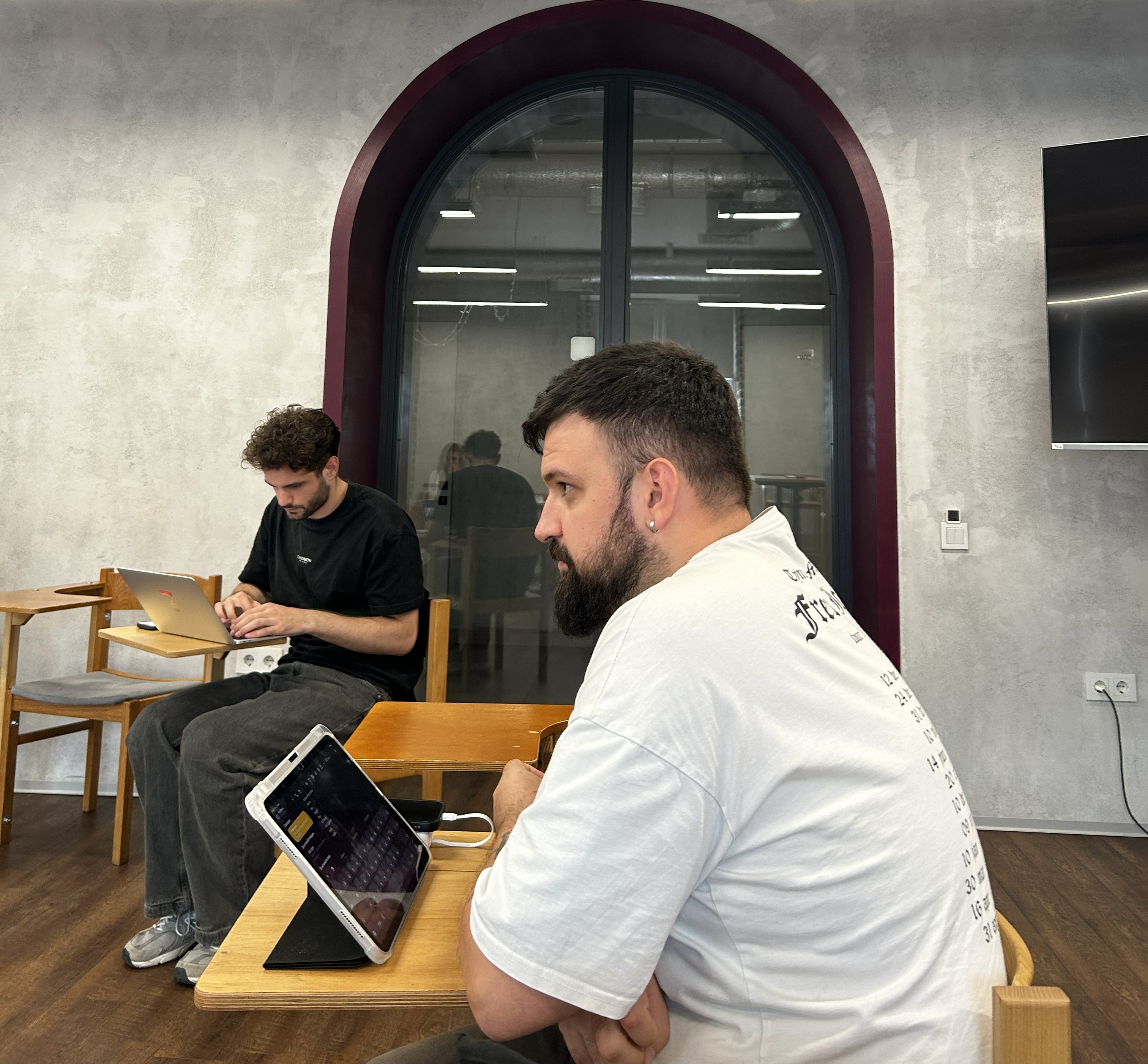
Next, Olesya Yaremchuk, writer, journalist, and program curator at the Institute for Documentation and Exchange (INDEX), spoke about how to tell the story of an entire community through the story of one person: "Because if we don't write these stories down, they may disappear along with the people who remember them." Together with Olya Lidovska, participants discussed the theme "Lviv - a city of (non-)memory": how the city remembers - and how it forgets.
Milena Liashenko, co-organizer of the All-Ukrainian "Generation Nika" award, spoke about the award, which carries forward the memory of 18-year-old artist Nika Kozhushko, who was killed in a russian bombing of Kharkiv. The award supports young artists who use their creative work to make sense of the war, their own lives, and Ukraine's future.
Sasha Dovzhyk, head of INDEX, writer and editor, spoke about how memory means not only preserving a person's name but also carrying forward what mattered to them. She recalled Victoria Amelina, a Ukrainian writer and war crimes researcher who was killed in a russian strike: "As long as a writer is read, they live." At the Field of Mars, Sasha presented the project "People of Culture Taken by the War" - beside the graves of the fallen, participants spoke not only about how they died, but about who they were, what they loved, and what they created.
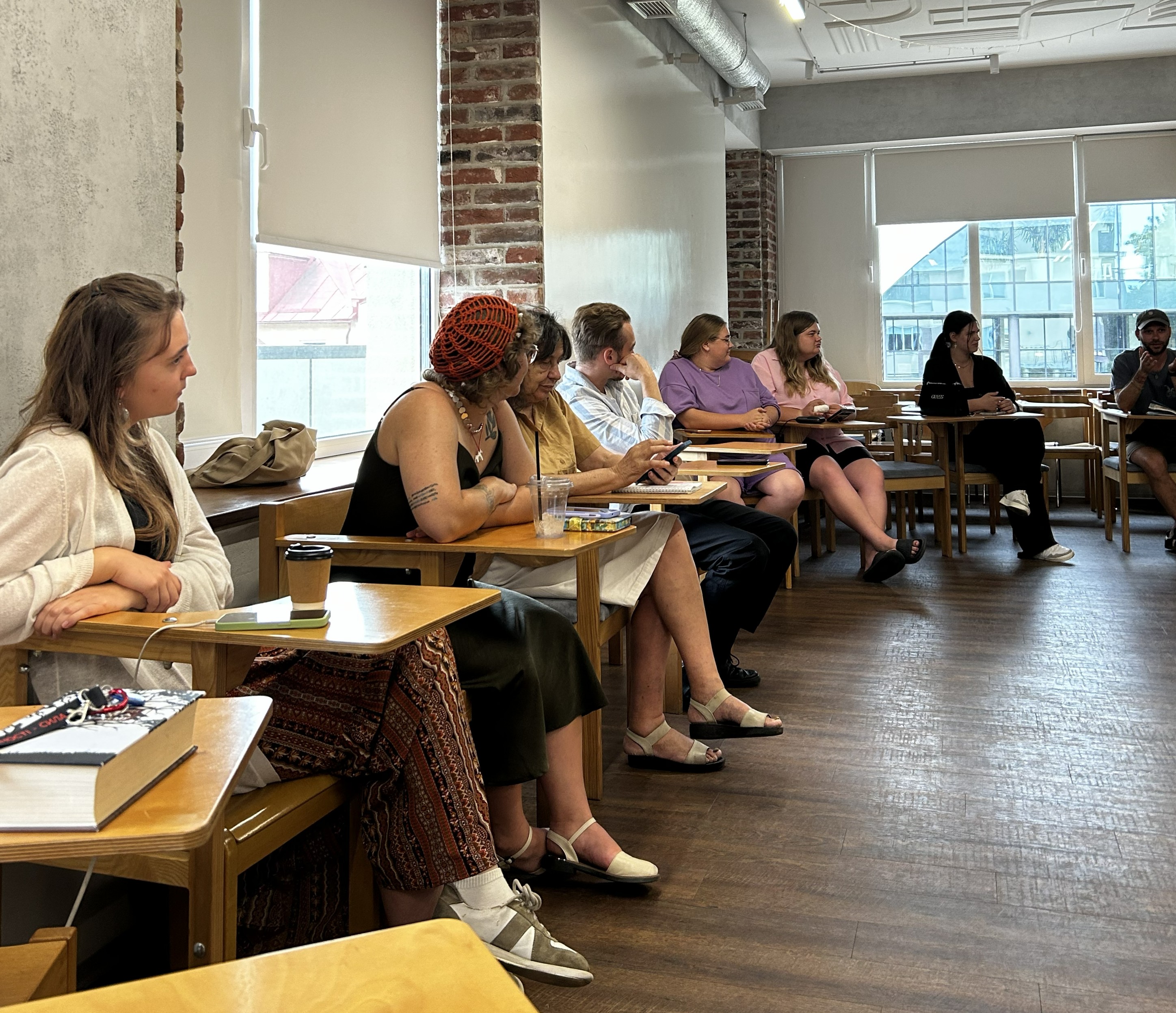
Participants also shared their own practices of preserving memory -from listening to the favorite playlist of someone who had died, to planting a garden or building a playground in their memory - and looked for ways to work with memory within their own communities.
We sincerely thank all the participants and speakers for this deep and honest conversation! We are especially grateful to our co-organizers of this event: INDEX: Institute for Documentation and Exchange, the Institute of Leadership, Management and Coaching (ILMC), and the Ukrainian Baptist Theological Seminary (UBTS).
Special thanks to the international NGO Peace Direct for the support that made this workshop possible.


